As a subscriber and frequent reader of The New York Times, it surprises and depresses me greatly that not more care is taken in checking facts and accuracy when it comes to scientific names of organisms and how these are formatted and presented. Many of the problems and inaccuracies that we see in publications, media, and in web content are perpetuated by The New York Times, a publication that prides themselves in correcting any factual error, however how small. But for taxonomic errors, they do not. There are exceptions of course, such as Carl Zimmer's writing, but overall a general taxonomic fact checking is lacking, especially outside the Science section.
The main problems within biological taxonomy are:
- Non-capitalizations of scientific family names
- Capitalization of species names
- Choosing to not format species and genus names in italics
- Wrong names for parts of organisms
- Images of the wrong species or other inaccurate image data
Lets dig into the details:
1. Non-capitalizations of scientific names of rank above species (orders, families, genera, etc.)
A the recent article in the Travel Section about the island of Runmarö in the Baltic archipelago featured entomologist Fredrik Sjöberg (
NYT Sept 4, by Stephen Heyman). In the article, his study group, the hoverfly family Syrphidae, is consistently and erroneously written as syrphidae.
"Fredrik is exclusively interested in this family of insects, syrphidae, which is distinguished by an uncommon flair for disguise."
Oh, in case you wonder how a wonderful Syrphidae looks like (since the article doesn't show one), here is one:
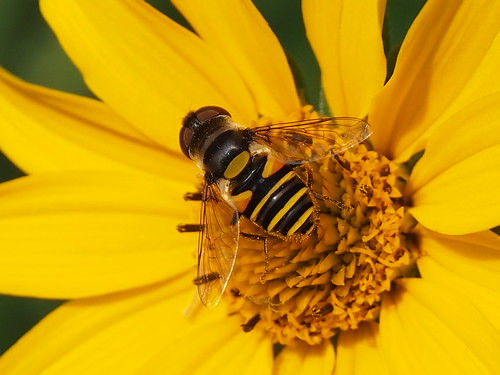 |
Unknown species of a hoverfly of the insect family Syrphidae, from New Jersey, USA.
(PS. E-mail me if you know the species, I'd love to know. UPDATE: This is probably Eristalis transversa)
Creative Commons photo by Lena Struwe. (source) |
Spelling Syrphidae as syrphidae is like spelling the entomologist's name as fredrik sjöberg, writing Oprah as oprah, or New York City as new york city. There are a few exceptions of people that choose to spell their names without capitalizations, like bell hooks. But in the science world, nobody ever spells this without capitalization. Capitalization is not optional for the scientific names for families, orders, and other higher ranks of larger groups of organisms. Why would NYT choose not to follow the scientific set standard?
The International Code for Zoological Nomenclature has very good, clear advice for how taxonomic names should appear in popular media, see this
link.
(Of course, NYT refuses to put in the umlauts from foreign languages as well, but that is a separate matter. It is Sjöberg, not Sjoberg, and Runmarö, not Runmaro. The meaning of the words change in Swedish if you remove the umlauts, so good luck googling some of these names :) . Wikipedia, on the other hand, correctly presents the words with umlauts, see for example
Tomas Tranströmer, which NYT links to in the article above.)
2. Capitalization of species names
Just a few days ago a new hominid species was published, an astonishing and exciting find. New York Times featured this prominently (
Sept 10, 2015, in an article by John Noble Wilford):
 |
Headline of Homo naledi story in The New York Times.
Screenshot by BotanicalAccuracy.com.(link) |
The new species of the genus
Homo (our own genus), is called
Homo naledi, but The New York Times capitalizes the word
naledi in the title (presumably due to their editorial style using Title Case capitalization in headings). In the text of the article, the name is written as "Homo naledi" (with correct capitalization) throughout. The problem here is of course that the readers will think that the new species is called
Homo Naledi, not
Homo naledi (its true name), if they just see the title.
PBS' NOVA series does it better: "
Homo naledi, Superhenge, and Humankind: NOVA Next Week in Review", so of course the species epithet can be in lower case letters even when using Title Case, but that means that you need to know something about taxonomic names.
For genus names, and for a species (which has a genus name and a species epithet, like
Homo naledi) there is also really no choice in capitalization. According to the International Commission on Zoological Nomenclature:
"Following the principle of binominal names (i.e. composed of two names) a species name is a combination of genus name and species name. The genus name comes first, and must start with a capital letter, the species name second, with a lower case letter (Art. 28; Appendix B6). This shows the hierarchy between genus and species; a genus may include a number of different species." (link) (my bolding)
3. Choosing to not format species and genus names in italics
It is recommended to put at least genus and species names in italics, and in scientific literature this is nearly always done and for a good reason. This is a lot easier today when books, magazines and newspapers are no longer typeset, but run on digital presses or completely provided as online documents.
The International Code of Zoological Nomenclature justifies this:
"In order to denote a clear distinction between scientific names of organisms and designations in common language, scientific names of all ranks should appear in the same distinctive, and preferably italic, type." (link)
 |
| New York Times article about a new snail species, Rissoella morrocoyensis, showing the name without italics. Screenshot by BotanicalAccuracy.com. (link) |
As far as I can tell The New York Times never put any species names in italics. However, they do use italics for other items in the papers, such as identification lines on published letters to the editor (
see question and explanation here), so it is not a technical decision but an editorial one. To highlight the value of taxonomy and science, and to clarify the proper use of taxonomic names for organisms, it is highly recommended to put all species names in italics when you can.
4. Wrong names for parts of organisms
 |
Article about opium poppy harvest in Mexico in The New York Times.
Screenshot by BotanicalAccuracy.com. (link) |
"Though shy, she perks up when describing her craft: the delicate slits to the bulb, the patient scraping of the gum, earning in one day more than her parents do in a week." (
link)
Bulbs grow in the ground (usually), they formed by fleshy leaves on a very short stem at the base of a plant (Wikipedia has a good
description). What is harvested on the opium poppies is the gummy sap that is oozing out of the
fruits, the capsules, when cut. In the printed version, one photo caption by New York Times also used the word 'pods', which has no precise botanical meaning. Would you call the tail of an elephant its trunk? This is the same kind of mistake, and it is a ridiculous one to botanists and gardeners and generally educated people.
5. Images of the wrong species or other inaccurate image data
An earlier post on this blog featured the mistakes published in the review of the world-class foraging restaurant NOMA in Copenhagen (
July 6, 2010, article by Franz Bruni). The New York Times was notified that one of their photos of pine cones was incorrectly described as 'thuja cone', and with thuja being a toxic species, this was a mistake that certainly should have been corrected. It was not. It still features a pine cone listed as a thuja cone (see screenshot from today below). Not only are these two different species, they are also different genera and in different families. I doubt that Rene Redzepi serves his guests potentially toxic thuja cones.
 |
| The slide show accompanying the article about the NOMA restaurant features a pine cone in the photo, but it is described as a Thuja cone. Screenshot by BotanicalAccuracy.com (link) |
Why does taxonomic accuracy matter?
It is pretty simple.
"In all cultures, taxonomic classification means survival. 'The beginning of wisdom, as the Chinese say, is calling things by their right name.' " E. O. Wilson
And that right name is the name of the species, the family, the organism's part, and so on. We are 100% dependent on other species for our survival and future, and the taxonomic sciences make it possible to study these, be it microbes, parasitic diseases, edible plants, or pollinating insects.
The essay by Helen MacDonald in The New York Times (
June 19, 2015) fantastically describes what happens when you can put words to the world around you, in this case using field guides. You start to see things, remember things, care about things, and love things, and these things, be it forests, flowers, bugs or birds, are things that matters to humanity on large as well as personal scales. Names matter a lot.
The New York Times has a great opportunity to be a model and leader in public education about biodiversity and taxonomy among newspaper media. It is not that hard, and it is something that is desperately needed in the US. Spell and format the scientific names correctly, actually describe what a hoverfly is in an travel article, do not publish an image saying a toxic plant is edible confusing foragers and foodies, know what plant part you talk about, and so on... Start being the standard for other media in the field, please.
I think that the sloppiness shown in The New York Times when it comes to morphology and species taxonomy would never be accepted when it comes to historical facts and names related to people. For scientific facts this doesn't seem to matter to the editors, since fact-checking is lacking and pointed out errors persist and are not even corrected.
It would be very easy for The New York Times to contact a couple of biologists well-versed in taxonomy and systematics within their fields, hire them to be on call, and have them fact check all articles mentioning or showing species and organisms, regardless of newspaper section. Scientific accuracy is of course needed in areas like travel, food, agriculture, and political news too; species do not stop to exist outside of the Science section.
References:
"What’s in a name? Scientific names for animals in popular writing" (ICZN)
International Code of Nomenclature for algae, fungi, and plants (ICN)
International Code of Zoological Nomenclature (ICZN)