Showing posts with label taxonomy. Show all posts

Sunday, September 13, 2015

Dear New York Times, when will you start to care about taxonomic accuracy?

As a subscriber and frequent reader of The New York Times, it surprises and depresses me greatly that not more care is taken in checking facts and accuracy when it comes to scientific names of organisms and how these are formatted and presented.  Many of the problems and inaccuracies that we see in publications, media, and in web content are perpetuated by The New York Times, a publication that prides themselves in correcting any factual error, however how small.  But for taxonomic errors, they do not.  There are exceptions of course, such as Carl Zimmer's writing, but overall a general taxonomic fact checking is lacking, especially outside the Science section.

The main problems within biological taxonomy are:
  1. Non-capitalizations of scientific family names
  2. Capitalization of  species names
  3. Choosing to not format species and genus names in italics
  4. Wrong names for parts of organisms
  5. Images of the wrong species or other inaccurate image data
Lets dig into the details:

1. Non-capitalizations of scientific names of rank above species (orders, families, genera, etc.)

A the recent article in the Travel Section about the island of Runmarö in the Baltic archipelago featured entomologist Fredrik Sjöberg (NYT Sept 4, by Stephen Heyman). In the article, his study group, the hoverfly family Syrphidae, is consistently and erroneously written as syrphidae.
"Fredrik is exclusively interested in this family of insects, syrphidae, which is distinguished by an uncommon flair for disguise."
Oh, in case you wonder how a wonderful Syrphidae looks like (since the article doesn't show one), here is one:
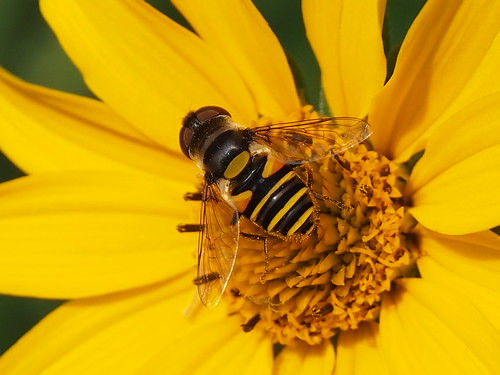
unknown Syrphidae fly  P8170593croppedq
Unknown species of a hoverfly of the insect family Syrphidae, from New Jersey, USA. 
(PS. E-mail me if you know the species, I'd love to know. UPDATE: This is probably Eristalis transversa)
Creative Commons photo by Lena Struwe. (source)
Spelling Syrphidae as syrphidae is like spelling the entomologist's name as fredrik sjöberg, writing Oprah as oprah, or New York City as new york city.  There are a few exceptions of people that choose to spell their names without capitalizations, like bell hooks. But in the science world, nobody ever spells this without capitalization. Capitalization is not optional for the scientific names for families, orders, and other higher ranks of larger groups of organisms.  Why would NYT choose not to follow the scientific set standard?

The International Code for Zoological Nomenclature has very good, clear advice for how taxonomic names should appear in popular media, see this link.

(Of course, NYT refuses to put in the umlauts from foreign languages as well, but that is a separate matter. It is Sjöberg, not Sjoberg, and Runmarö, not Runmaro.  The meaning of the words change in Swedish if you remove the umlauts, so good luck googling some of these names :) . Wikipedia, on the other hand, correctly presents the words with umlauts, see for example Tomas Tranströmer, which NYT links to in the article above.)

2. Capitalization of species names
Just a few days ago a new hominid species was published, an astonishing and exciting find.  New York Times featured this prominently (Sept 10, 2015, in an article by John Noble Wilford): 
Headline of Homo naledi story in The New York Times.
Screenshot by BotanicalAccuracy.com.(link)
The new species of the genus Homo (our own genus), is called Homo naledi, but The New York Times capitalizes the word naledi in the title (presumably due to their editorial style using Title Case capitalization in headings). In the text of the article, the name is written as "Homo naledi" (with correct capitalization) throughout. The problem here is of course that the readers will think that the new species is called Homo Naledi, not Homo naledi (its true name), if they just see the title.

PBS' NOVA series does it better: " Homo naledi, Superhenge, and Humankind: NOVA Next Week in Review", so of course the species epithet can be in lower case letters even when using Title Case, but that means that you need to know something about taxonomic names.

For genus names, and for a species (which has a genus name and a species epithet, like Homo naledi) there is also really no choice in capitalization. According to the International Commission on Zoological Nomenclature:
"Following the principle of binominal names (i.e. composed of two names) a species name is a combination of genus name and species name. The genus name comes first, and must start with a capital letter, the species name second, with a lower case letter (Art. 28; Appendix B6). This shows the hierarchy between genus and species; a genus may include a number of different species." (link) (my bolding)
3. Choosing to not format species and genus names in italics
It is recommended to put at least genus and species names in italics, and in scientific literature this is nearly always done and for a good reason.  This is a lot easier today when books, magazines and newspapers are no longer typeset, but run on digital presses or completely provided as online documents.

The International Code of Zoological Nomenclature justifies this:
"In order to denote a clear distinction between scientific names of organisms and designations in common language, scientific names of all ranks should appear in the same distinctive, and preferably italic, type." (link)
New York Times article about a new snail species, Rissoella morrocoyensis, showing the name without italics. Screenshot by BotanicalAccuracy.com. (link)
As far as I can tell The New York Times never put any species names in italics. However, they do use italics for other items in the papers, such as identification lines on published letters to the editor (see question and explanation here), so it is not a technical decision but an editorial one. To highlight the value of taxonomy and science, and to clarify the proper use of taxonomic names for organisms, it is highly recommended to put all species names in italics when you can.

4. Wrong names for parts of organisms
Article about opium poppy harvest in Mexico in The New York Times.
Screenshot by BotanicalAccuracy.com. (link)
"Though shy, she perks up when describing her craft: the delicate slits to the bulb, the patient scraping of the gum, earning in one day more than her parents do in a week." (link)

Bulbs grow in the ground (usually), they formed by fleshy leaves on a very short stem at the base of a plant (Wikipedia has a good description). What is harvested on the opium poppies is the gummy sap that is oozing out of the fruits, the capsules, when cut.  In the printed version, one photo caption by New York Times also used the word 'pods', which has no precise botanical meaning. Would you call the tail of an elephant its trunk?  This is the same kind of mistake, and it is a ridiculous one to botanists and gardeners and generally educated people.

5. Images of the wrong species or other inaccurate image data
An earlier post on this blog featured the mistakes published in the review of the world-class foraging restaurant NOMA in Copenhagen (July 6, 2010, article by Franz Bruni).  The New York Times was notified that one of their photos of pine cones was incorrectly described as 'thuja cone', and with thuja being a toxic species, this was a mistake that certainly should have been corrected.  It was not.  It still features a pine cone listed as a thuja cone (see screenshot from today below). Not only are these two different species, they are also different genera and in different families.  I doubt that Rene Redzepi serves his guests potentially toxic thuja cones. 

The slide show accompanying the article about the NOMA restaurant features a pine cone in the photo, but it is described as a Thuja cone. Screenshot by BotanicalAccuracy.com  (link)
Why does taxonomic accuracy matter?
It is pretty simple. 
"In all cultures, taxonomic classification means survival. 'The beginning of wisdom, as the Chinese say, is calling things by their right name.' " E. O. Wilson
And that right name is the name of the species, the family, the organism's part, and so on.  We are 100% dependent on other species for our survival and future, and the taxonomic sciences make it possible to study these, be it microbes, parasitic diseases, edible plants, or pollinating insects.

The essay by Helen MacDonald in The New York Times (June 19, 2015) fantastically describes what happens when you can put words to the world around you, in this case using field guides.  You start to see things, remember things, care about things, and love things, and these things, be it forests, flowers, bugs or birds, are things that matters to humanity on large as well as personal scales. Names matter a lot.

The New York Times has a great opportunity to be a model and leader in public education about biodiversity and taxonomy among newspaper media.  It is not that hard, and it is something that is desperately needed in the US. Spell and format the scientific names correctly, actually describe what a hoverfly is in an travel article, do not publish an image saying a toxic plant is edible confusing foragers and foodies, know what plant part you talk about, and so on... Start being the standard for other media in the field, please.

I think that the sloppiness shown in The New York Times when it comes to morphology and species taxonomy would never be accepted when it comes to historical facts and names related to people.  For scientific facts this doesn't seem to matter to the editors, since fact-checking is lacking and pointed out errors persist and are not even corrected.

It would be very easy for The New York Times to contact a couple of biologists well-versed in taxonomy and systematics within their fields, hire them to be on call, and have them fact check all articles mentioning or showing species and organisms, regardless of newspaper section.  Scientific accuracy is of course needed in areas like travel, food, agriculture, and political news too; species do not stop to exist outside of the Science section.

References:
"What’s in a name? Scientific names for animals in popular writing" (ICZN)
International Code of Nomenclature for algae, fungi, and plants (ICN)
International Code of Zoological Nomenclature (ICZN)

Wednesday, December 3, 2014

Why does the medicinal plant Astragalus membranaceus need to change its name? (updated)

(Please see nomenclature update at the end of this post)

One of the commonly used herbal medicines in Traditional Chinese Medicine (TCM) and other herbal pharmacopeias is the Chinese milk vetch, also called Radix Astragali, huang qi in Mandarin, or 黄芪 or 黄耆 in Chinese characters). Be aware though, that the name 'milk vetch' is used for many different species around the world, and some of them toxic. In the United States, the root of huang qi is widely sold as a dietary supplement ingredient, with the name astragalus established as the “standard common name” according to the rules by the US Food and Drug Administration, and therefore required on labels of such products sold in the USA. 
Huang qi is a species that has long been known scientifically as Astragalus membranaceus, a species that was described by Alexander von Bunge in 1868. Von Bunge was a German botanist that took part in several expeditions to Siberia, Mongolia, the Altai Mountains, and Central Asia's steppes in the mid-1800s.
Photo of astragalus / huang qi roots.
©  Steven Foster (link)
Unfortunately for von Bunge and for us today, it turns out that Bunge was not first with the name Astragalus membranaceus. Over 220 years ago, in 1794, Conrad Moench wrote a book on plants cultivated in the botanical garden of Marburg, Germany. In his book Moench renamed an Egyptian milk vetch species that Carl Linnaeus had earlier described as Astragalus trimestris, to Astragalus membranaceus.

All naming of plants have to follow the laws of scientific botanical nomenclature, which are called the International Code of Nomenclature for Algae, Fungi, and Plants, often shortened to ICN or 'The Code'. According to the rules of the Code you can't rename already described species on a whim, like Moench did. So Moench's name Astragalus membranaceus was properly described, but superfluous, i.e., it is an extra name that should not be used.
Photo of astragalus / huang qi.
©  Steven Foster (link)
Another rule in the Code is that when you describe a new species, you can't use a genus and species name combination that has already been used for another species. If you do, you create something called a homonym, a name that in reality applies to two different species. When you have two homonyms, the oldest name that was validly published according to all rules of the Code has priority (it wins!) and the younger name has to be put in disuse and replaced with another species name for the younger species. The younger homonym name then becomes an illegitimate name, which should not be used.

But since Moench's name was validly described, the name for the species von Bunge discovered in Asia could not be the same as Moench's species name (Astragalus membranaceus). It is too bad this situation was not realized until relatively recently. By now, there has been 160 years of published books and reports using von Bunge's species name, Astragalus membranaceus, for the Asian medicinal milk vetch. But, the nomenclature rules have to be followed or the naming of millions of species on Earth would turn into a chaotic mess. There is a possibility to get exceptions from the rules, but such exceptions have to be formally proposed and then voted on by a large botanical community of scientists that only meet at the International Botanical Congress every 4 years.
The five taxonomic groups relevant for 'huang qi' nomenclature.
Geographic information is approximate.
© BotanicalAccuracy.com.

So, von Bunge's species from Asia, the medicinal Chinese milk vetch, needed a new name. Botanists went through the literature to see if other earlier botanists had maybe described other new species based on plants that were now considered to be part of Bunge's species. And yes indeed, there were several names available for plants that sometimes had been considered separate from Astragalus membranaceus, but now were included, so the oldest of those species names can be used.

The problem was that the botanists could not agree on how to divide up the plants into different species. In taxonomy we often talk about 'lumpers' (botanists that like to have a few, widespread and morphologically variable species) and 'splitters' (who like many small species, often from small geographical areas and more uniform characteristics).

The current world expert on this group of milk vetches is Dr. Xiangyun Zhu from Institute of Botany in Beijing in China, who has graciously helped us understand this complicated issue. After detailed morphological analyses, Dr. Zhu showed that the species Astragalus penduliflorus from Europe, is actually the same species as the medicinal plant known as Astragalus membranaceus in East Asia (see his paper in Nordic Journal of Botany 23: 283-294 (2005). When biologists learn more about species, sometimes their names change to reflect our new understanding of their relationships and properties. It might be inconvenient at times, but is part of scientific progress.

So, the current treatment is that several milk vetch species are being merged into one single species. Several names are available. Astragalus penduliflorus was described first, by the famous naturalist Lamarck in 1779. Therefore it is clear that Astragalus penduliflorus then is the oldest name and the one that now should be used for huang qi. Not all botanists might agree with this, but this is the best and most science-based naming so far.

The current species names and distribution of 'huang qi' and other varieties in its species (note all are included).
Geographic information is approximate.
© BotanicalAccuracy.com.
  Within a species you can also have subspecies, varieties, and forms. Botanists frequently discuss such fine-tuning of taxonomy and might have arguments over it. Sometimes the decisions can have economic and ethnobotanical implications. For example, if only one subspecies contains an active compound, then it is important that you use the right subspecies and not just any plant from the whole species.
In the case of the medicinal Chinese milk vetch, the species previously known as Astragalus membranaceus now has the new taxonomic name Astragalus penduliflorus ssp. mongholicus var. dahuricus.

This means that huang qi belongs to the subspecies mongholicus, and within that subspecies to the variety dahuricus. So only the species name "Astragalus penduliflorus" will not guarantee you to get the traditionally used huang qi. Make sure that the label (or content) is more specific than just the species name since this is such a geographically widespread and morphologically (and most likely chemically as well) variable species. 

Another name that has been used for the Asian Astragalus membranaceus is Astragalus propinquus.  It is the name that is currently listed in The Plant List from Kew Gardens, which is based on the LegumeWeb database.  Unfortunately, those have outdated information and need to be updated.  Especially for legumes (Fabaceae), be aware that The Plant List is not properly updated (yet).
Astragalus propinquus is now also a synonym of Astragalus penduliflorus ssp. mongholicus var. dahuricus.

Astragalus (huang qi) herbal supplement sold by GNC in the US.  Source: GNC (fair use).
In Chinese medicine, the criteria for appropriate medicinal plant material might be even more strict, such as that only one particular region would be the most wanted producer of a medicinal plant. Such generally accepted regions or places for high-quality material of each medicinal plant are called ‘Daodi’ in Chinese (see review article on this by Zhao et al., 2012, cited below). The plant materials produced in a 'Daodi' place is generally acknowledged to be the most bioactive and of the best quality. So the price of a ‘Daodi’ medicinal plant is usually higher than the same plant species produced in other areas. For huang qi, the ‘Daodi’ plants are the ones produced in the Shanxi Province of China. The materials from other non-‘Daodi’ provinces can be sold, but would not be as accepted or wanted by the customers.


Cultivation of astragalus / huang qi.
©  Steven Foster (link)
What I have described above is called botanical nomenclature, the naming of plants and the rules that guide their scientific names. These rules are active worldwide in botany and mycology and know no political borders. Slightly separate from nomenclature is the research on circumscribing a species. That means that you do research on which individuals belong to one species and not another, or if a species might be one, two, or three separate species. If you lump two species together and consider them one single species, then you also have to follow the rule of priority. The oldest species name in your lumped species will become the species name for the new, larger species, and the younger name will become a synonym, a name that shouldn't be used.

Conclusion:
The current scientific name for Astragalus membranaceus
(as described by Bunge and native to Asia) is:

Astragalus penduliflorus ssp. mongholicus var. dahuricus
or
Astragalus penduliflorus var. dahuricus
(two name options for the same variety)  

UPDATE:
A proposal has been submitted to conserve the name Astragalus membranaceus published by Bunge, which would make it available for this species again. The proposal will be voted on by the botanical community at the International Botanical Congress in China in Summer of 2017. 


The details: Jinshuang Ma, Cheng Du, Wendy L. Applequist and Peiliang Liu have proposed the conservation of the name Astragalus membranaceus Fisch. ex Bunge and the rejection of A. membranaceus Moench. The two names are the same but indicate different species and published by different authors, so they are homonyms, and only one name can be considered legitimate and that is the earliest published one. Conservation is an exception from rule of priority ('first publication rules') outlined in the Botanical Code, and it would make the name A. membranaceus Fisch. ex Bunge a legitimate name, despite being published after Moench's name (which was used for another species). A recent taxonomic revision treated this medicinal species as a variety of European A. penduliflorus Lam. (Zhu, 2005), specifically A. penduliflorus var. dahuricus X.Y.  Zhu. This large circumscription of A. penduliflorus is so far only accepted by few botanists. If the name A. membranaceus Fisch. ex Bunge is not conserved, and there is a desire to treat the Asian populations as a species apart from the European A. penduliflorus, the name A. mongholicus is available for this species. Because A. membranaceus is such a well-known name to the public and it is widely used in commercial activities and scientific research papers, the proposers for the conservation of the name thought it is better to keep A. membranaceus for this medicinal plant, i.e., make it officially available through a decision to conserve it (Du et al., 2016). Thus, if the plant known as 'Huangqi' in China is considered a different species than A. penduliflorus, the name A. membranaceus Fisch. ex Bunge could be used as an accepted name for this Asian taxon. However, the ratification of a conserved name has to be decided through a vote during the nomenclature meeting of XIX International Botanical Congress (IBC), so whether this species (as an Asian entity) will be called A. membranaceus or A. penduliflorus will be decided in Summer of 2017 in Shenzhen, China. IBC congresses only occur every five years, and they handle many proposals of these types.

Authorship: This blogpost was written by Lena Struwe and Shen-hao (Shawn) Yao.

Acknowledgements:
Many thanks to Xiangyun Zhu and Steven Foster, who both provided excellent taxonomic and ethnobotanical insights and photographs for this article.

References and more suggested reading:

Du, C., Applequist, W.L., Liu, P., & Ma, J. 2016. (2431) Proposal to conserve the name Astragalus membranaceus Fisch. ex Bunge against A. membranaceus Moench (Leguminosae). Taxon, 65(2) 392-393.

Foster, S.  1998. Astragalus: A Superior Herb. Herbs for Health, Sep/Oct 1998: 40-41.

Foster, S.
2004. The Secret Garden: Important Chinese Herbs in American Horticulture: A Photo Essay. HerbalGram. 2004; 64:44-51 (link)

Zhao,  Z., P. Guo, & E. Brand. 2012. The formation of daodi medicinal materials. Journal of Ethnopharmacology 140: 476-481.

Zhu, X-Y. 2005. Revision of the Astragalus penduliflorus complex (Leguminosae - Papilionoidae). Nord. J. Bot. 23: 283-294.

Tuesday, August 12, 2014

Coleus - I am calling your name! (But what is it?)

Many gardeners and naturalists are frustrated when we botanists change the scientific names of species. I feel frustrated too, when the crown vetch changes its gorgeous, easy-to-remember (for me) name Coronilla varia, to Securigera varia. Now the genus name sounds like a financial security company, not like a gorgeous crown of pink flowers.

But change happen, and it happens for a good reason. We are sorting out old problems and making things better and more logical in the long run. Keep on reading and you will find out what
Coleus hybrids.
(cc) photo by Pharaoh Hound on Wikimedia.
Wild species change genus for mainly one reason. We try to classify all species with their closest relatives, so that everything in a genus comes from one common ancestor species. That means, all species has one origin back in time and share a common history. To figure out this history and these relationships we use DNA and morphology, and build up evolutionary trees that shows the story of species evolution over time.

Of course, when most plants were first described, they weren't part of evolutionary studies. We first started to construct evolutionary trees using DNA and computers in the late 1980s. In the beginning of botanical taxonomy at Linnaeus' time we didn't even know about evolutionary theory, since that came about in the 1860s with Darwin. The start date for botanical nomenclature is Linnaeus book Species Plantarum from 1753. Before recent times, scientists gave species their scientific placement and names based on overall similarity or dissimilarity, not evolutionary relationships.

In the blogpost about "Magilla Perilla" we listed the scientific name for coleus as Solenostemon scutellarioides. We also listed two older synonyms as Plectranthus scutellarioides and Coleus blumei. A few weeks ago we e-mailed botanist Alan Paton, who works on the evolution of this plant group at Royal Botanic Gardens, Kew in London, and asked him, "What is the correct species name for coleus, for real, and where does it belong?" 

His answer was maybe not what you expect. He said:
"I'm writing up the research at the moment. [...] Plectranthus including some other genera on one hand and Coleus and some other relations including Solenostemon form sister clades. The actual picture with denser sampling shows a slightly more complex picture than these earlier papers; but they give an outline which suggests Coleus should be recognized and Solenostemon would be embedded within it."

What does this mean?  Be prepared to see the scientific name your garden coleus change back to original genus Coleus in the near future, and Solenostemon will be no more (it will be merged into Coleus). Plectranthus will still be around but with fewer species and not include your garden coleus. So, coleus will be a Coleus again, which is very nice, and certainly easy to remember. It has been a mess with these names, but Alan is sorting it all out, once and for all. Check back here on the Botanical Accuracy blog when his paper comes out for an update.

It is really all about getting the right species in the right place in the giant evolutionary family tree, which includes over 300 000 plant species in the world. No wonder it is a little chaotic at times. But we have to do it, and we have to use the most updated scientific names possible to talk to each other about plants and understand our plants, across over the world. It is all part of the progress of knowledge.  And sometimes increased knowledge isn't that convenient to begin with.

References:

Paton, A. J., et al. Phylogeny and evolution of basils and allies (Ocimeae, Labiatae) based on three plastid DNA regions. 2004. Molecular Phylogenetics and Evolution 31: 277-299.

Lukhoba, C. W., M. SJ Simmonds, & A.J. Paton. 2006. Plectranthus: A review of ethnobotanical uses. Journal of Ethnopharmacology 103: 1-24.

'What is in a (PLANT) name?' on the FLORIDATA website

Wednesday, June 25, 2014

The species names of citrus - a sweet, sour, and sticky mess

Everybody knows the great and tasty citrus fruits - lemon, lime, orange, grapefruit, tangerine, and clementine, and maybe even the more rare bergamot, pomelo, tangelo, kumquat, yuzu, and tangelo.

Various slices of citrus fruits.  (Image from USDA, public domain.)
Since ancient times these plants have been cultivated, domesticated, and used by humans, and hybridization (on purpose or accidental) have created new hybrids. Citrus plants really do like to hybridize and since many of these hybridization and domestication events happened in the past it has been really hard to figure out these questions:
1) What is a species? (biological boundaries and evolution)
2) What is a hybrid? (= cross between two species, biology, evolution, and genetics)
3) What are the parent species of a hybrid? (genetics)
4) What is the correct scientific name for a species or a hybrid? (scientific nomenclature)

With the help of Dr. David Mabberley, an expert on the genus Citrus, I tried to sort this out since so many scientific names for citrus used on beauty and body products are inconsistent and sometimes flat out wrong and need to be updated. Please note that this is a work in progress for science, and that more research is needed to clarify relationships further.  Citrus relationships are a very messy business, indeed. So, here is the most up-to-date information, as far as I can discern.

This is a summary picture of the current hypotheses of the relationships of the most common species and hybrids of Citrus:

Origins and scientific names for the most commonly cultivated citrus fruits. 
Based on data from D.J. Mabberley's publications.

In botanical taxonomy a species (*) can only have one current and unique scientific name.  Other names are synonyms and their use should be phased out, and only be listed as synonyms in publications. This is to ease the communication and understanding in botany, horticulture, ethnobotany, and agriculture. We should all know what we talk about and we should talk about the same thing when we use a species name, right?
(* except for some fungi, but the mycologists are sorting that out now too, slowly. )

Hybrids either get their parents' names with an 'x' in between parent names (mother listed first), or a brand new species epithet preceded by a 'x'.  So, in the figure above, the name for orange can be listed as Citrus maxima x Citrus reticulata, or Citrus x aurantium.  You often see the name Citrus sinensis or Citrus x sinensis for oranges, but those are synonym names that should not be used anymore.

The group Citrus x aurantium includes a large array of different cultivars and varieties, such as orange, tangor, grapefruit, bitter orange, clementine and tangelo.  This is because the initial hybrids where then back-crossed to different parents, so Citrus x aurantium is really a large hybrid complex. 

So, what are then the most up to date names for cultivated and commercial citrus fruits? Here they are:


Common name
Current scientific name
Common inaccurate botanical and ingredient names
bergamot
Citrus × limon
Citrus aurantium var. bergamia, Citrus bergamia
bitter orange
Citrus × aurantium
Citrus amara, Citrus aurantium ssp. amara, Citrus iyo
cedrat
Citrus reticulata
Citrus x reticulata
citron
Citrus medica
Citrus medica var. acida
clementine
Citrus × aurantium
Citrus clementina
grapefruit
Citrus × aurantium
Citrus paradisi, Citrus × paradisi
kaffir lime (now called makrut lime)
Citrus hystrix

kumquat
Citrus japonica

lemon
Citrus × limon
Citrus limon, Citrus medica var. limon
lime
Citrus × aurantiifolia
Citrus aurantifolia
makrut lime
Citrus hystrix

mandarin
Citrus reticulata
Citrus x reticulata
orange
Citrus × aurantium
Citrus aurantium, Citrus aurantium var. sinensis, Citrus sinensis, Citrus × sinensis
pomelo
Citrus maxima
Citrus grandis
satsuma
Citrus reticulata
Citrus unshiu
Tahiti lime (seedless)
Citrus x latifolia

tangelo
Citrus × aurantium
Citrus tangelo
tangerine
Citrus reticulata
Citrus x reticulata,  Citrus × tangerina
tangor
Citrus × aurantium
Citrus nobilis, Citrus x nobilis
yuzu
Citrus × junos
Citrus junos

Many of the commercial, non-commercial, government or non-profit databases and publications do not use these updated names.  They are often lagging behind and changing names take time.

Want to read more about the delicious history and taxonomy of citrus plants?  Try these scientific papers if you want something more substantial than Wikipedia
    Mabberley, D. J. 1997. A classification for edible Citrus (Rutaceae). Telopea 7: 167-172.
    Mabberley, D. J. 2004. Citrus(Rutaceae): A review of recent advances in etymology, systematics, and medical applications. Blumea 49: 481-498 
     Zhang, D. & D. J. Mabberley.  Citrus in Flora of China. [Lots of interesting information here!]
    Li, X., R. Xie, Z. Lu, & Z. Zhou. 2010. The origin of cultivated Citrus as inferred from internal transcribed spacer and chloroplast DNA sequence and Amplified Fragment Length Polymorphism fingerprints. Journal of the American Society for Horticultural Science 135: 341-350. [Note - some of their results do not agree with the parent hypotheses presented above.]
    (Many thanks to Dr. David J. Mabberley for expert help and information for this post.)