The common garden plant, wildflower and sometimes 'weed'
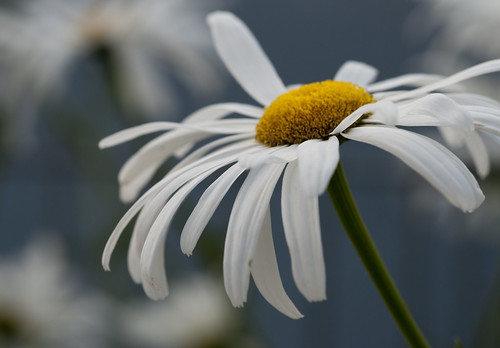
oxeye daisy is often listed under several different Latin names. How can that be, and which one is right? It is a common plant all over North America, from Texas to Alaska to northern Canada (and Hawaii), and is originally from Europe.
What happened was that originally this yellow and white flower was named
Chrysanthemum leucanthemum by Carl Linnaeus on May 1, 1753, in his work
Species Plantarum. This book is the starting point for all scientific plant names forever... Anything published before 1753 doesn't really matter when it comes to scientific names for plants. So for plants, in the beginning, it was Linnaeus.
 |
Oxeye daisy
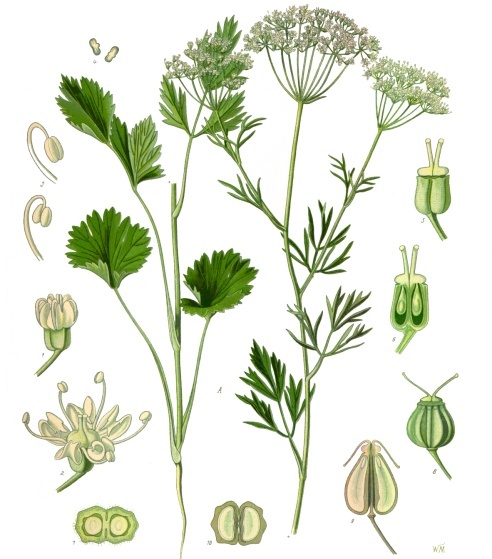
Illustration from Flora Batava by Kops et al. (1800)
Public domain (Wikipedia) |
The French botanist Lamarck disagreed with this classification and wrote in 1779 that this species should be called
Leucanthemum vulgare instead. Botanists discussed and argued about this for a while, but for a long time most people followed Linnaeus' name.
Centuries later it was shown that the genus
Chrysanthemum was actually a mixed group of species that weren't that closely related to each other, so the genus would have to be split up into several genera, some of which already had been accepted by previous botanists. Scientists want only closely related species to belong to the same genus; it is the only thing that makes sense evolutionarily and logically. Linnaeus and other early botanists didn't have evolutionary information as a classification criteria (nor a scientific theory for that matter, that all came with Darwin's theory of natural selection in the late 1800s).
So,
Chrysanthemum was split up in the late 1990s. Which of the subgroups would get the original name
Chrysanthemum? According to the
International Code of Nomenclature, which rules the scientific naming of plants, each genus has a type species, and that type species always has to be in the genus it is the type for. The type for the genus
Chrysanthemum was set in 1929 as the species
Chrysanthemum coronarium, so oxeye daisy would not get to keep the
Chrysanthemum name, neither would the beloved 'mums' in our gardens. (Things got a little complicated when it later was shown that the type herbarium specimen for
Chrysanthemum coronarium actually wasn't that species at all, but that is another story.)
 |
Cultivated chrysanthemums. These are not oxeye daisies.
(cc) Pigsonthewing on Wikimedia |
The horticulturalists were upset! What about their chrysanthemums ('mums'), the popular garden plants that were cultivated all over the world? Those species were now to be in a genus called
Dendranthema. Slowly this name got accepted under protests from the horticultural industry, until Piers Trehane said in 1995 - hey, we can propose an exception and keep the genus name
Chrysanthemum for chrysanthemums by switching the type species to
Chrysanthemum indicum (one of the mums), if enough people vote for this change (
here is the proposal for this). So this was proposed, and after a few years and a vote among botanists, this was passed in 1998/99 as an exception to the rules of The Botanical Code. Now
Chrysanthemum includes the cultivated chrysanthemums, but not the oxeye daisy, and
Chrysanthemum coronarium above was to be put in another genus (it ended up in
Glebionis).
Then, if oxeye daisy can't be in
Chrysanthemum, what genus name should it take? Luckily, Lamarck had already put it in a genus named
Leucanthemum in 1779 when he disagreed with Linnaeus, so the genus name
Leucanthemum was available.
When a species changes genus it nearly always keeps its species epithet, the second word in its scientific name. It might change ending sometimes, but the earliest published species epithet stays, it has priority over later published species names. But, that would be
leucanthemum for oxeye daisy, since Linnaeus named it
Chrysanthemum leucanthemum. And that would mean a species named
Leucanthemum leucanthemum, with the genus and species epithet the same (a tautonym), which is a total no-no in botany.
Zoology loves those names, they have them for all kinds of animals,
Crex crex (corncrake, a bird),
Vulpes vulpes (red fox),
Bison bison (bison) and so on. But for oxeye daisy, no way. So, they had to look for the oldest name among other species epithets used for this species, and that was Lamarck, again. He had called oxeye daisy
Leucanthemum vulgare, and that is the name it has now.
So, Linnaeus was the first person that described this species, but Lamarck now gets the authorship for the current scientific name.
In conclusion,
CORRECT NAME: Leucanthemum vulgare Lam.
INCORRECT NAME: Chrysanthemum leucanthemum L.
[note, this is not an optional name, this is an old name that shouldn't be used anymore]
Who gets this right?
For example, USDA-PLANTS, Encyclopedia of Life (EoL), Wikipedia, and Royal Horticultural Society.
Who gets it wrong and needs to update their websites?
Well, lots of seed and plant companies (American Meadows, Victory Seeds, etc.), some state departments (Minnesota Dept of Natural Resources, Colorado, etc.), a bunch of garden websites, and WebMD.
[Updated 18 November 2014 with new
Chrysanthemum type information provided by DH. Thanks!]